
HSA for individuals
Discover the best way to manage the high cost of healthcare.
- Save on premiums
- Keep your premium savings
- Maximize tax savings
- Accelerate long-term savings
Want to learn more? HSA Guide
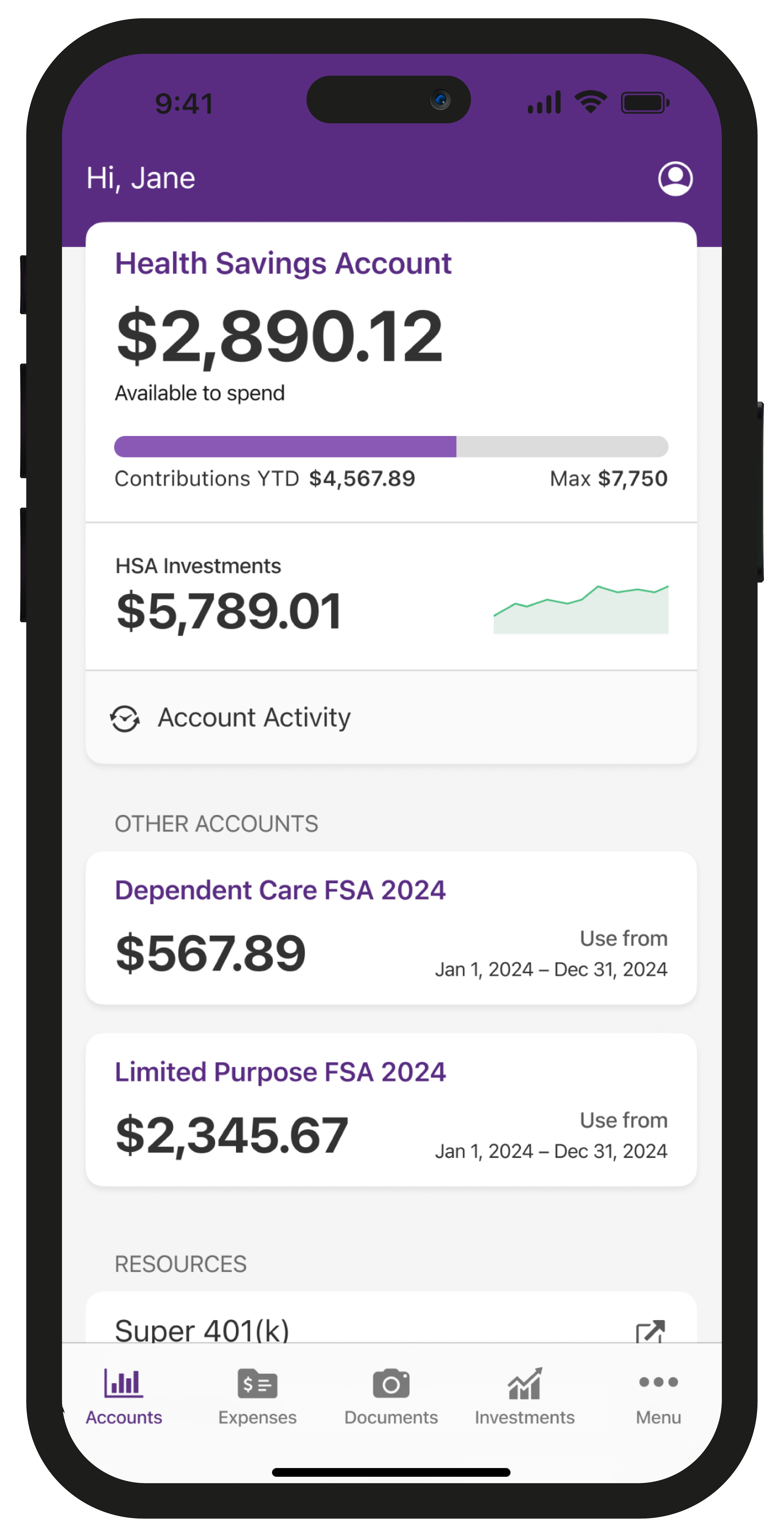
$1,234.56
Available to Spend
Health Savings Days
Enjoy limited-time savings, Aug. 17-23
Get Started2026 Guidelines
2027 Guidelines
Minimum deductible amounts
$1,700 single plan
$3,400 family plan
$1,750 single plan
$3,500 family plan
Maximum out-of-pocket limits
$8,500 single plan
$17,000 family plan
$8,700 single plan
$17,400 family plan
HSA contribution limits
HSA members can contribute up to the annual maximum amount that is set by the IRS.
$4,400 single coverage
$8,750 family coverage
HSA members can contribute up to the annual maximum amount that is set by the IRS.
$4,500 single plan
$9,000 family plan
Catch-up contribution (age 55+)
At age 55, individuals can contribute an additional $1,000.
At age 55, individuals can contribute an additional $1,000.
Prorated contribution limits
The IRS states that contribution limits must be prorated by the number of months one is eligible to contribute to a health savings account. Divide the contribution limit by 12 and contribute that amount.
The IRS states that contribution limits must be prorated by the number of months one is eligible to contribute to a health savings account. Divide the contribution limit by 12 and contribute that amount.
FSA with grace period terms
A health FSA with a grace period may offer a period of up to 2 months and 15 days after the close of a plan year during which members can incur reimbursable expenses. This 2-month-and-15-day grace period generally disqualifies those from contributing to an HSA until the first calendar month beginning after the grace period ends (e.g., April 1 in the case of a grace period beginning January 1 and ending March 15) unless the health FSA account balance is $0 at the end of the immediately prior plan year (e.g., as of the previous December 31 for a calendar-year plan), in which case such coverage can be disregarded and the individual is HSA-eligible during the grace period.
A health FSA with a grace period may offer a period of up to 2 months and 15 days after the close of a plan year during which members can incur reimbursable expenses. This 2-month-and-15-day grace period generally disqualifies those from contributing to an HSA until the first calendar month beginning after the grace period ends (e.g., April 1 in the case of a grace period beginning January 1 and ending March 15) unless the health FSA account balance is $0 at the end of the immediately prior plan year (e.g., as of the previous December 31 for a calendar-year plan), in which case such coverage can be disregarded and the individual is HSA-eligible during the grace period.
IRA to HSA rollover
HSA owners may make a one-time distribution of money from an IRA into an HSA. An individual may only do this if they are already eligible to have an HSA. Funds can only be rolled over once during a lifetime. The maximum rollover amount is the same as the annual HSA contribution limit for that year.
HSA owners may make a one-time distribution of money from an IRA into an HSA. An individual may only do this if they are already eligible to have an HSA. Funds can only be rolled over once during a lifetime. The maximum rollover amount is the same as the annual HSA contribution limit for that year.
Discover the best way to manage the high cost of healthcare.
Want to learn more? HSA Guide
$1,234.56
Available to Spend